

Modern business isn’t just about products or services. First and foremost, it’s about people. How thoughtfully you welcome new team members and how gracefully you say goodbye to those moving on directly affects the health of your entire organization.
That’s why modern HRM systems place special emphasis on onboarding and offboarding. These stages shape how effectively your team performs and how your company is perceived in the job market.
The First Day in a New Family: All About Onboarding
Do you remember your first day at a new job? If the memory is a good one, chances are the onboarding was done right. At its core, onboarding is a carefully designed “soft landing” that helps a newcomer feel confident — not like a bull in a china shop — and quickly become part of the team.
Without unnecessary bureaucracy, let’s break it down. The first step is the technical setup: a workstation, system access, corporate email. Next comes training — what to do, how to do it, and who to turn to if something goes wrong. And then there’s the most human part (pleasant or awkward, depending on the day): meeting the team. Not just a quick “hi and bye,” but a real chance to understand who does what and who’s best to ask for advice.
Good onboarding is like a solid foundation for a house. When a new hire feels supported from day one, they reach full productivity faster and don’t waste weeks trying to figure out how things work. For the company, that means real value sooner — rather than a month of someone wandering around the office looking lost.

No Chaos, No Stress: Onboarding Through HRM
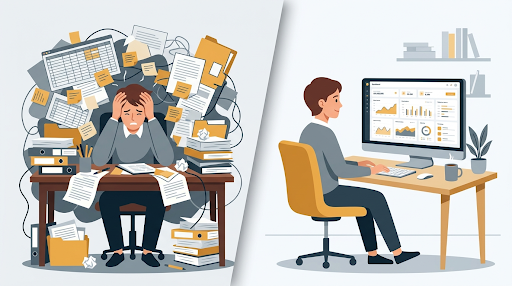
Want to know the best thing about modern HRM systems? They turn a complex onboarding process into something that feels almost like a modular toolkit. No more running between departments with paperwork or losing important files in endless email threads. Instead, you get one smart system that keeps everything under control.
“Hey HR, it’s time to send the onboarding training invite!”
“Hi IT, don’t forget to set up system access for the new hire.”
Meanwhile, the new employee simply completes tasks step by step in their personal dashboard. Feels almost like a video game, except instead of fighting monsters, they’re conquering workplace routines.
And when it comes to progress, managers no longer need to ask every hour, “So, how’s our new hire Maria doing?” One quick look in the system shows that Maria has completed her basic training, met the team, and is ready to take on her first projects. Clear, transparent, and refreshingly calm.
Automate every stage and track progress without the hassle. Your team is ready to start — and you’re ready for new opportunities.
The Last Day as a New Beginning: All About Offboarding
It’s said you can learn a lot about a company by how people leave it. This is where offboarding plays a huge role — it’s the graceful finale of the employee journey. It’s not just “hand in your badge and goodbye,” but a structured process that helps both the company and the employee part on good terms.
Think about it this way: your colleague may have spent years with the company, building valuable knowledge and connections. It’s crucial that this expertise doesn’t walk out the door with them, but stays within the organization. That’s why effective offboarding includes knowledge transfer, documenting critical information, and tying up loose ends — from closing system access to returning company laptop.
And perhaps most importantly, offboarding shapes how former employees talk about your company in the future. It’s much nicer when someone remembers their last day not as “I finally escaped,” but as “we said a proper, warm goodbye.”
Offboarding Without the Headache: Let HRM Handle It
“Who’s supposed to close the access?”
“Where are the documents?”
“What happened to that critical information?”
Thankfully, modern HRM systems turn this chaos into a clear, logical process.
The system automatically creates a farewell checklist: it reminds accounting about the final payroll, prompts IT to revoke access, and notifies HR to prepare the necessary documents. If something’s missed, the system nudges the right people — no detail slips through the cracks.
HRM systems also help preserve valuable knowledge within the company. The departing employee can document key highlights directly in the system, so their successor knows exactly where to look. And of course, there’s the final step — the exit survey. After all, who better than a former employee can honestly share what could be improved?
Caring for People Is an Investment in the Future
You know what a warm welcome and a respectful goodbye have in common? They both shape your company’s story! When an HRM system makes these processes seamless, everyone wins: new hires become productive faster, and departing employees remain friends of the company.
Let’s be honest: no one wants to feel stuck in the same place in their career. That’s exactly why personal development plans are more than just another checkbox on an HR to-do list — they’re a real tool for growing a strong team. Think of them as a reliable roadmap that doesn’t just show where to go, but also helps every team member unlock their full potential along the way, stay motivated, and achieve more. And ideally, all of this should be simple and clear — without bulky spreadsheets or confusing frameworks.
Stress-free onboarding and offboarding is a reality with MayBee HRM. Improve your employees’ experience by investing in their comfort and growth.

 We stand with Ukraine